

2020.9.6-11.15
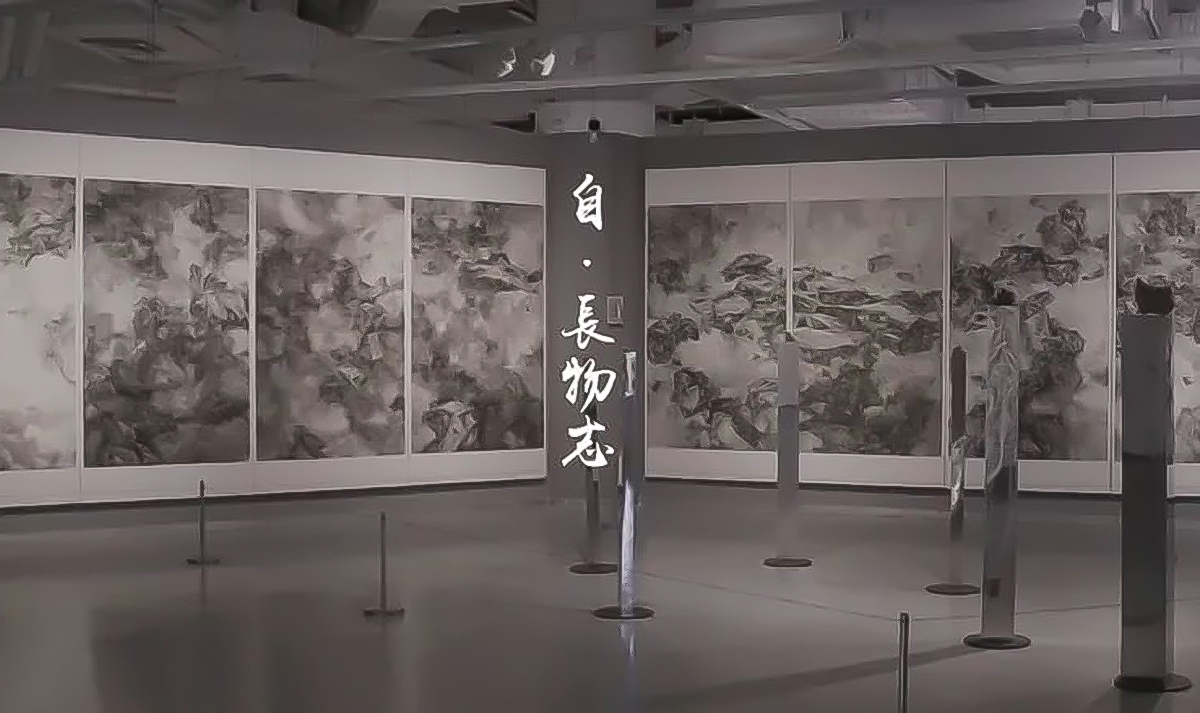
"Self growth Chronicles" is the third exhibition in the "Self" series. The first two exhibitions, "From Peony Pavilion" and "From Canglang Pavilion", were a rethinking of Kunqu Opera and gardens. "The Chronicles of Changwu" is a re exploration of "things" starting from Wen Zhenheng's "Chronicles of Changwu" in the late Ming Dynasty.
The word "long object" in "The Chronicles of Longevity" is also full of entanglement from pronunciation to meaning. Someone has conducted specialized research on this: there are two pronunciations, one pronounced as ch á ng w ù, which means "good things". Qing Fucha Dunchong's "Yanjing Suishi Ji · Tudi Temple": "There is no good thing in the market, but the difference between the flower factory and the pigeon market is considerable." The other pronounced as zh à ng w ù, which means "extra things". In Liu Yiqing's "Shi Shuo Xin Yu · De Xing" from the Southern Dynasty, "(Wang Da) saw him sitting on a six foot mat and said respectfully, 'Qing has come to the east, so he should have this thing, so he can lead me.'" Gong was speechless. After leaving, he immediately presented the person he was sitting on as a gift. Since there were no more seats left, he sat down and recommended himself. When he heard this, he was very surprised and said, 'I originally said there were many ministers, so I asked for your ear.' He replied, 'If my father-in-law does not understand Gong, Gong is a person without any elders.' Are those 'elders' in the' Chronicles of Everlasting Things' unnecessary or essential items in the lives of the 'Wen Zhenheng'? The complexity of this is difficult to clarify.
Changwu Zhi is a key to the life and taste of literati in Suzhou during the late Ming Dynasty.
The exhibition takes this book as a clue, continuing the curatorial concept of "self" series seeking energy from tradition for the present. Looking back at the many issues in the intertextuality between art and life, it constructs a new field for viewers to see, explore, and think about.
Of course, the exhibition hopes to not only discuss the so-called quaint interests, but also break free from barriers and reflect on some inherent issues from a more international and historical perspective. Under the logic of "grid objects", it unfolds four sections: "tracing", "zhi", "ge", and "wu", juxtaposing the thinking processes of pursuit, analysis, absorption, deconstruction, appropriation, recombination, creation, and attempting to digest. Through the presentation of transmission and change, viewers can explore more relationships between things and people, things and society, things and history, and even the reactionary force of "things" on world affairs and human hearts.
Exhibition Location 丨Jinji Lake Art Museum
Curators 丨Wu Hongliang
Cai Feng
Cai Zhisong
Cao Ou
Chen Fei
Chen Qi
Chen Zhuo
Duan Jianyu
Duan Yuanwen
Fang Limin
Fei Jun
Geng Xue
Hao Liang
He Xiangyu
Huang Gang
Jiang Ji'an
Jiao Xingtao
Kang Chunhui
Liang Quan
Lin Gang
Lin Haizhong
Liu Jianhua
Luo Min
Qiu Yu
Shao Beiyan
Shen Jianguo
Shen Qin
Song Dong
Tai Xiangzhou
Wang Chao
Wang Lei
Wang Lijun
Wang Muyu
Xu Bing
Xu Jing
Yin Xiuzhen
Ying Jinfei
Yu Yu
Zhang Le
Zhang Xiaofeng
Zhao Yue
Zhi Min
Zhu Liang
Zhu Yamei